Customer Segmentation
Customer Segmentation Analysis for Colombian Fintech
Data Analytics Project
A multi-dimensional customer segmentation study using Latent Class Analysis (LCA) to identify 6 distinct customer personas from 48,723 customers and 3.1M transactions.
1. Business Challenge
A leading Colombian fintech company needed to understand their diverse customer base to:
- Improve targeted marketing effectiveness
- Reduce churn in at-risk segments
- Identify cross-selling opportunities
- Optimize resource allocation across customer groups
2. Methodology
Data Scope: 48,723 customers | 3.1M transactions | 58 variables
Analysis Framework:
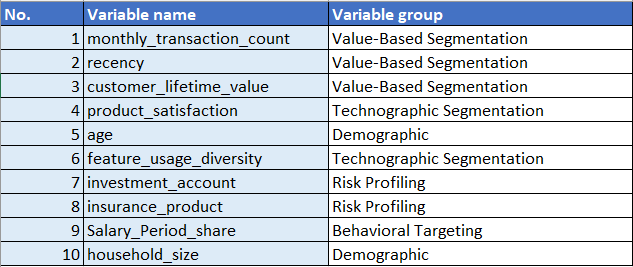
- Behavioral Targeting
- Risk Profiling
- Technographic Segmentation
- Value-Based Segmentation
Key Steps:
- Selected significant variables, Feature Engineering
- Compared K-Means vs. Latent Class Analysis models
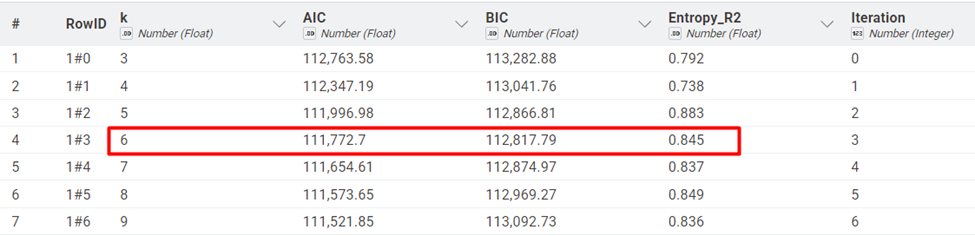
- Selected optimal model (LCA with 6 clusters, Entropy R² = 0.845)
- Created actionable customer personas
3. Key Findings
6 customer segments discovered
After analyzing business domain and checking correlation value, 10 variables are remained.I will run LCA clustering trials to find out the most suitable number of latent clusters. At k = 6, BIC gets lowest point and Entropy_R2 reaches a high point of 0.845.
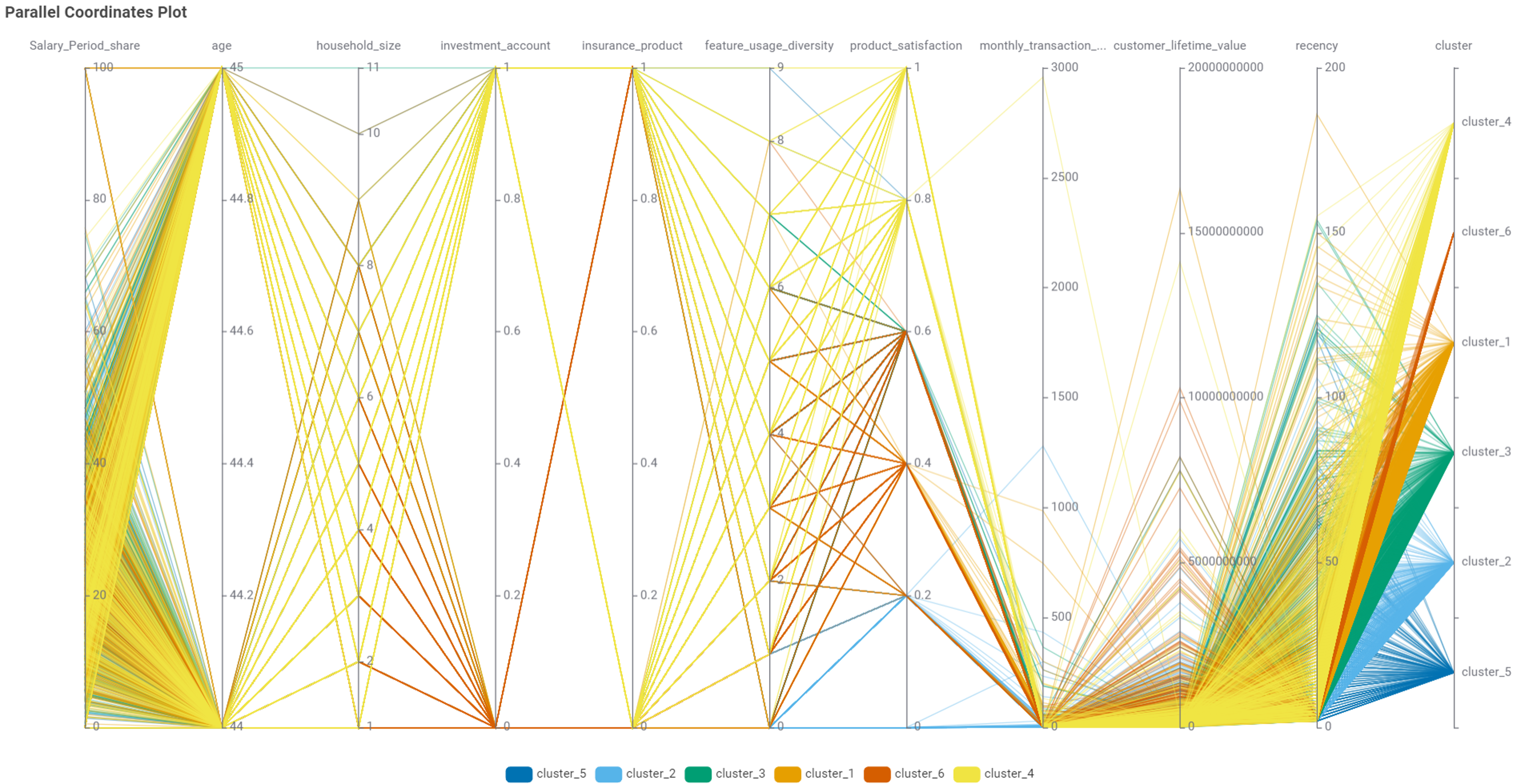
The value of features in each cluster are visualized by Parallel Coordinates Plot.
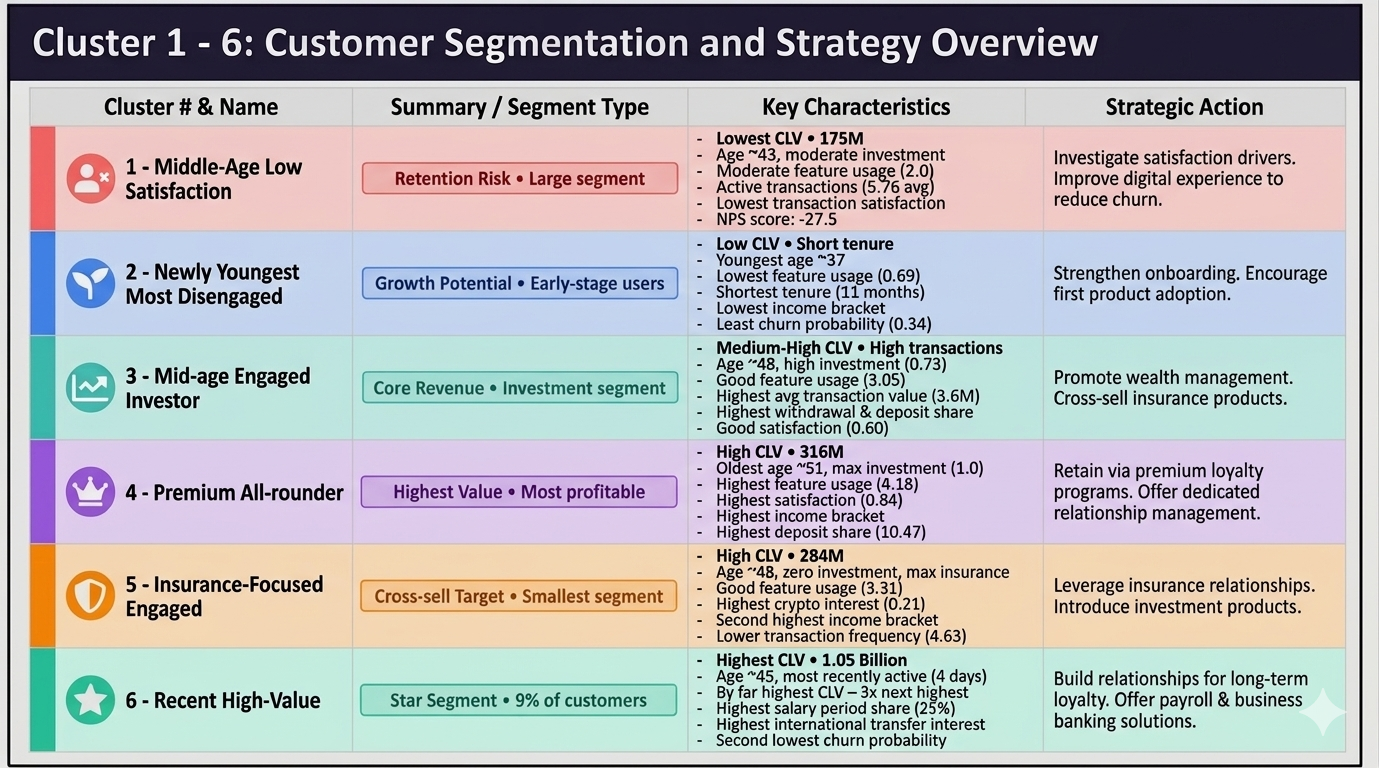
Customer Personas and Business Recommendation
- Cluster 4 and 6 demand the highest retention investment as top CLV contributors with strong engagement.
- Cluster 3 and 5 offer clear cross-sell pathways - investment products for insurance-focused customers and insurance for investor-focused ones.
- Cluster 1 requires proactive re-engagement to address the satisfaction gap before churn accelerates across this large segment.
- Cluster 2, while currently low-value, represents the future customer base and benefits most from structured onboarding programs that build early product habits and long-term loyalty.
4. Technical Summary
Tools & Methods:
- KNIME Analytics Platform
- Latent Class Analysis (LCA)
- Principal Component Analysis (PCA)
- Feature Engineering & Selection
- Data Binning & Transformation
Model Performance:
- Entropy R²: 0.845 (exceeds 0.8 threshold)
- BIC: 112,817.79
- 10 variables across 4 business dimensions
- Silhouette comparison: LCA >> K-Means (0.139)
5. Workflow
This analysis is conducted on KNIME Analytics Platform.
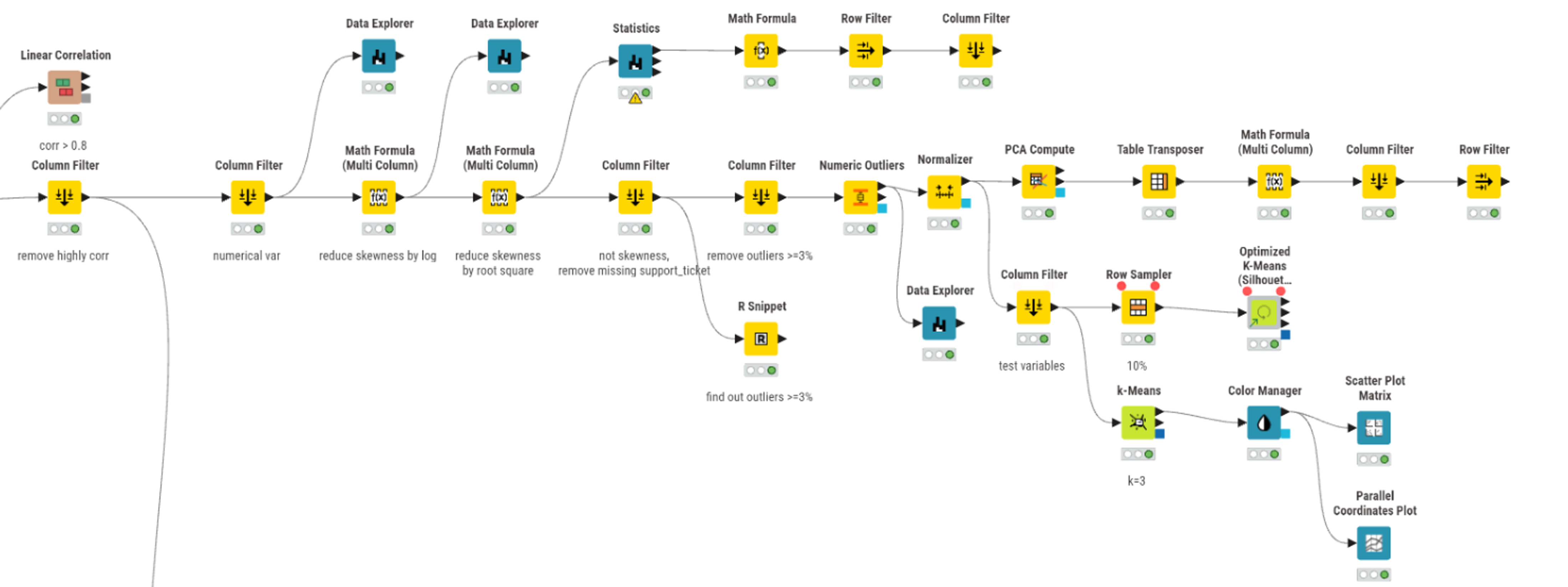
Feel free to explore the full workflow here: https://hub.knime.com/s/p7LaJUaJYsiFkF47.